Begin with the style of meal
Tell the team whether guests will be served at tables, collect food from a buffet or use a separate food point. Include the approximate number who need to sit at the same time, plus any speeches, presentations or other activities during the meal. The service method affects where furniture and equipment need to go.
A table preference is useful, but it is not a layout on its own. The actual table and chair specification, guest movement and serving arrangements must fit the agreed structure and site. Avoid selecting a marquee from a seating count or copying dimensions from a photograph.
Compare the decisions, not an assumed capacity
| Dining decision | What to discuss |
|---|---|
| Round or longer tables | Your preferred social arrangement, the available furniture and the complete layout. |
| Main group or speaker position | Sightlines and how guests and service staff move around it. |
| Food service | Where food arrives, how guests collect it if relevant and where clearing takes place. |
| Other activities | Space that remains available for drinks, entertainment or evening dancing. |
| Access needs | Guest routes and seating requirements throughout the meal. |
Use an activity sketch
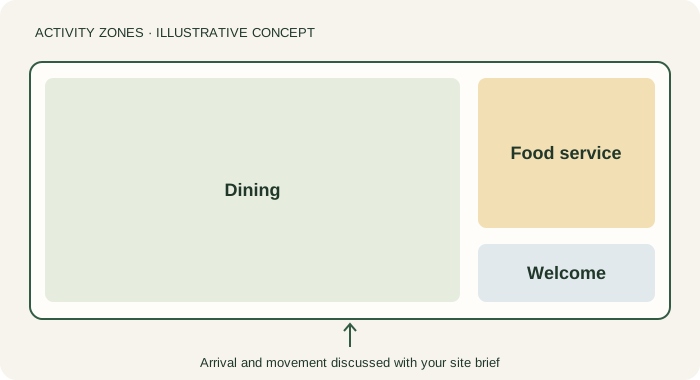
Mark the activities you want to keep separate, then ask the team to develop the appropriate event layout. Do not draw guest numbers into this concept as if it were a seating chart.
Resolve what happens after the meal
If tables will move, agree which items move, where they go, who does the work and when. Keep required routes available during the change and confirm the position of equipment that stays in place. Share the final dining and evening requirements together so the quotation covers the whole event.